Schönbrunn Palace
TicketLens lets you:
Search multiple websites at onceand find the best offers.
Find tickets, last minuteon many sites, with one search.
Book at the lowest price!Save time & money by comparing rates.
With well over 3 million annual guests, Schönbrunn Palace is one of the most popular tourist attractions in Vienna. This is no coincidence. After all, the former summer residence of Emperor Franz Joseph and Empress Elisabeth aka Sisi is symbolic of Viennese splendor and Baroque charm.
Today, the imperial apartments and gardens are open to tourists. However, the queues are often long, Tickets should therefore be booked in advance to avoid waiting times. By Klaus Kainz
Today, the imperial apartments and gardens are open to tourists. However, the queues are often long, Tickets should therefore be booked in advance to avoid waiting times.
By Klaus KainzSelect a date to find available tickets, tours & activities:
Tickets With Guided Tour
Offers for guided tours of Schönbrunn PalaceVienna: Schönbrunn Palace & Gardens Skip-the-Line Tour
4.7(8416)
getyourguide.com
Go to offer
Vienna’s Schönbrunn Palace Guided Tour with Skip-the-Line Tickets
4.6(2187)
Go to offer
Vienna Pass
Save money with this city pass / combo ticket that gives you entry to over 60 attractions in Vienna.Vienna PASS: Digital Sightseeing Pass for 85+ Attractions
4.3(3996)
Go to offer
Digital Vienna FLEXI Pass: Choose from 70+ Top Sights
4.2(685)
Go to offer
Strudelshow
Experience real Viennese apple strudel at the strudel show in Schönbrunn.Schönbrunn Palace: Mozart & Strauss Concert with Tour & 3-Course Dinner
4.7(146)
headout.com
Go to offer
Schönbrunn Palace: Mozart & Strauss Concert with 3-Course Dinner
4.6(114)
headout.com
Go to offer
Vienna: Schönbrunn Palace Entry Ticket and Wine Tasting
4.6(86)
getyourguide.com
Go to offer
Vienna: Schönbrunn Palace Entry Ticket with Lunch
4.4(366)
getyourguide.com
Go to offer
See all Strudelshow
More Tickets & Tours
Discover even more tickets & tours around Schönbrunn Palace.Vienna: Mozart and Strauss Concert at Schönbrunn
4.5(4553)
Go to offer
Vienna: Skip-the-Line Schönbrunn Palace & Gardens Tour
4.8(7936)
getyourguide.com
Go to offer
Vienna: Skip-the-Line Schönbrunn Palace and Gardens Tour
4.8(1903)
getyourguide.com
Go to offer
Schönbrunn Palace & Gardens Skip-the-Line Guided Tour
4.5(2574)
headout.com
Go to offer
See all More Tickets & Tours
4 tips for visiting the Schönbrunn Palace
 Vienna Pass
1
Vienna Pass
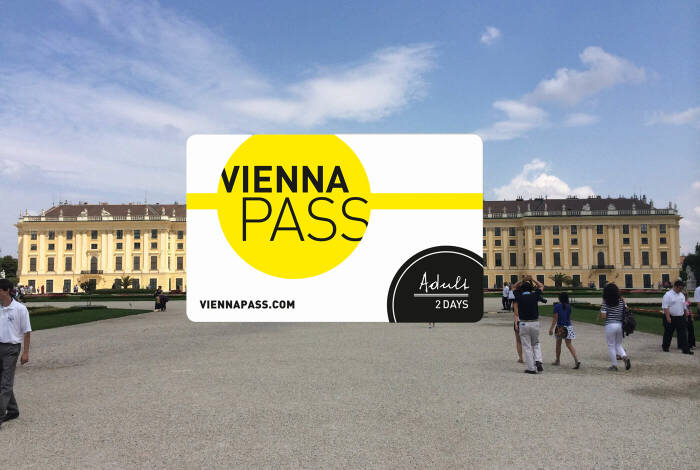
Anyone staying in Vienna for a longer period of time should consider purchasing the Vienna Pass. Around 70 Viennese attractions, including the Schönbrunn Palace, are included. Also included is admission to the zoo Tiergarten Schönbrunn, which is right next door.
 Neptune Fountain | Pixabay - CC BY 2.0
2
Follow the house rules
Strict security measures apply at Schönbrunn Palace. So follow the applicable house rules during your visit: smoking and eating are prohibited within the exhibition and all luggage, including umbrellas, must be left in the checkrooms. Photographs are prohibited, as is bringing dogs - only excluding assistance dogs. A distance must be kept from the exhibits, touching is not allowed.
3
Dress Appropriately
Attention: there are long distances to be covered on foot on the site, many of which are outdoors. While it can get very hot on the large grounds in summer, if there is a chance of rain, you should be appropriately equipped with rain gear. Sturdy footwear is also advisable.
4
Set priorities
Due to the gigantic grounds and the extensive exhibition areas, you should be clear in advance what exactly you want to see at Schönbrunn Palace or make a precise plan on site with the help of the overview maps. We have summarized the most important sights in the next section.
Schönbrunn Palace: the most important sights
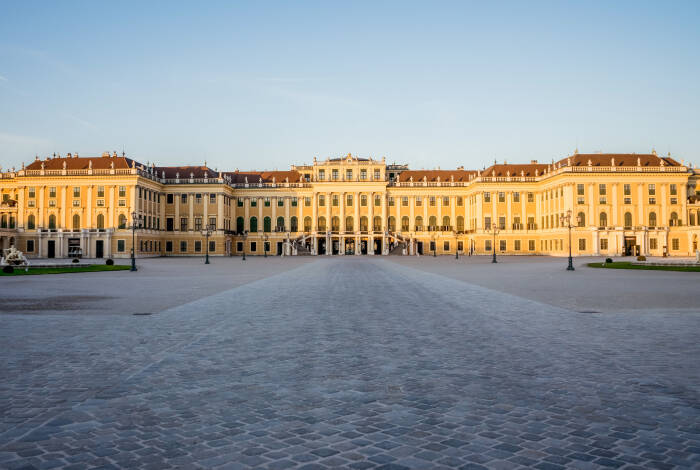
Schönbrunn Palace is all about courtly lifestyle and imperial splendor, not least because of the faithful furnishings of the antique chambers. On the 180-hectare (445-acre) grounds, however, you should carefully consider which sights fit best into your schedule.
The Palace
In the palace, the representative halls and private living quarters of Sisi, Franz and Maria Theresa are accessible as part of the admission fee. Typical of the era, the rooms are sumptuous with gold, exotic woods and paneling. In addition to the bookable Imperial Tour, which revolves primarily around the famous imperial couple, the Grand Tour covers additional areas of Schönbrunn Palace.
The Palace's Garden
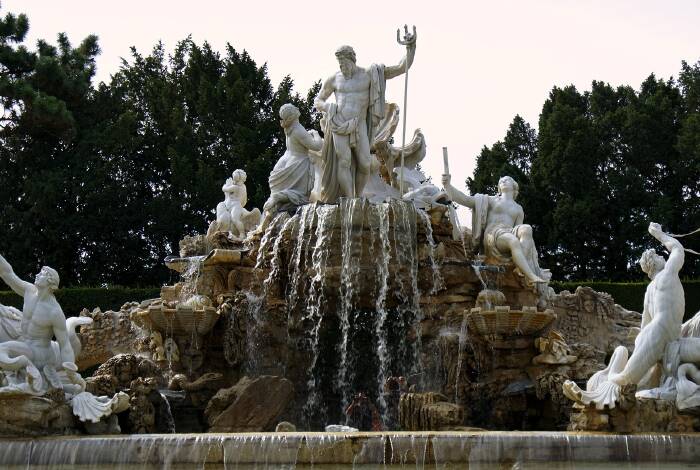
In the baroque park there are more than 30 statues from ancient mythology as well as numerous noble fountains. Especially worth mentioning are the Neptune Fountain, but also the Mazes and the Labyrinth. Other highlights include the Obelisk Fountain and the Palm House. A climb up to the Gloriette is worthwhile for the magnificent view of Schönbrunn and Vienna. Alternatively, the Panoramabahn Schönbrunn can also be taken to the viewpoint and other stops.
Children's Museum
The little ones don't have to be bored, because the Children's Museum Schloss Schönbrunn teaches the history of the palace playfully. With toys and costumes, children can experience imperial history up close.
Historical Virtual Reality Castle Tour
The sights in the castle sound like a dusty history lesson? Not quite true. Schönbrunn presents itself quite modern through its virtual reality attraction. Through digital glasses, visitors can immerse themselves in virtual stories about the imperial family and other historical figures such as Mozart, who are being played with authentic costumes within the digital sets.
Christmas market
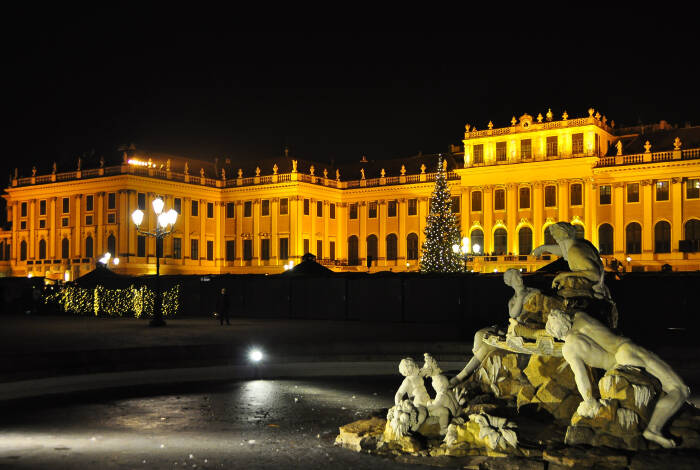
Due to the magnificent Christmas markets, Vienna is considered a popular destination even in winter. Therefore, it is only natural that the Schönbrunn Palace annually opens its own Culture & Christmas Market. During the winter season and up until early January the palace, with a Christmas tree some 20 m (65 ft) high, shines brightly in the evening in a moody atmosphere of light. In addition to punch and gift buying at the stalls, there are also live events.
Strudelshow
For those with a sweet tooth, the Strudel Show in Schönbrunn, which takes place several times a day, is particularly recommended: here, pastry chefs explain the individual steps involved in making a genuine Viennese apple strudel - of course, guests are also served a piece afterwards! It is worth booking in advance for this special performance.
Related Sights
There are other Viennese sights under the Schönbrunn Palace umbrella, but the palace tickets are not valid for them. For the Wagenburg and the Schönbrunn Zoo there is information and tickets on separate pages.
Combo tickets
However, Schönbrunn Palace offers combo tickets: with the Classic Pass Plus, one may enter all attractions of the palace, but also the zoo Tiergarten Schönbrunn, including the Palm House and Desert House. With the Sisi Ticket, after the Grand Tour in the palace, the Sisi Museum in Vienna's 1st district and the Furniture Museum in Vienna's 7th district may be visited. Especially suitable for children is the ticket Kindermuseum + Maze + Zoo. However, depending on the season, this combination ticket is not always available. Ticket prices can be found at the bottom of this page.
A history of Schönbrunn Palace
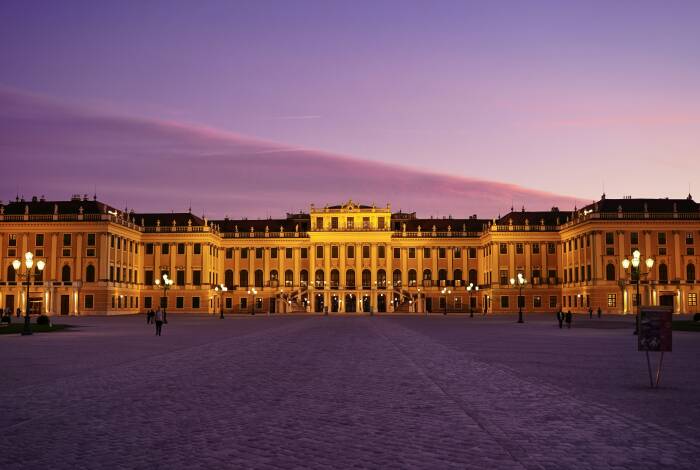
Few sights in Vienna bear as much witness to Habsburg splendor as the former imperial summer residence, Schönbrunn Palace. Our brief history of the palace explains what this baroque attraction is all about.
The origins
Originally, at the present site of Schönbrunn Palace near the Wien River in Hietzing, there have been ancient windmills and the so-called Gatterburg, the manor house of the mayor of Vienna. In 1569 Emperor Maximilian II acquired the forest and transformed the entire area into a hunting ground. For about a century, the forest area and the associated castle held on for this purpose until the latter was almost completely destroyed during the Second Turkish Siege in 1683.
First ambitions
After the destruction of the first palace, a new building was already on the agenda at the end of the 17th century. The new palace at Schönbrunn was to be particularly pompous and located at the level of the later Gloriette, in order to be able to compete with the magnificent French buildings at Versailles. However, the state budget did not allow for this, and a simplified design followed near the Vienna River. Only later Maria Theresa was to breathe new life into the palace.
Making a magnificent summer residence
Under Empress Maria Theresa, Schönbrunn Palace became what it is today. Starting in the 1740s, she officially made the palace grounds the summer residence of the Habsburgs and had it considerably expanded. Over the next few decades, a palace theater followed, where Mozart, among others, played, the botanical garden, and a menagerie - the foundation for the later Schönbrunn Zoo. But one important puzzle piece only followed later: It was only after the Congress of Vienna in the early 19th century that the facade was given its iconic yellow color.
A place for important political developments
Schönbrunn Palace was anything but an ordinary recreational oasis for the Habsburgs. Major political developments took place where tourists are drawn today. Napoleon, for example, stayed at the palace after occupying Vienna in the early 19th century. After Napoleon's fall, in turn, during the Congress of Vienna, Schönbrunn was the scene of pompous celebrations. When the last emperor of Austria abdicated at the end of the First World War, he signed his renunciation of the further rule of Austria at Schönbrunn Palace on November 11, 1918.
Tourist sensation
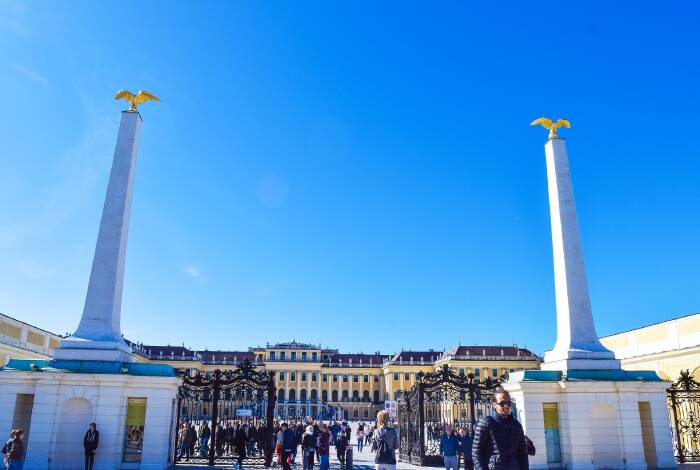
Schönbrunn Palace has over 1,400 rooms, most of which are now open to visitors. The baroque architecture and gardens not only look impressive from the outside. The interiors are also prime examples of art from the Baroque and Rococo periods as well as styles from the Gründerzeit. After all, the entire palace complex was meant to be representative of the power of the Habsburg dynasty. Today, the restored imperial chambers can be visited by guests, as can the impressively landscaped gardens with fountains, statues, maze and a labyrinth.
Frequently Asked Questions
Is Schönbrunn Palace accessible to disabled people?
All palace exhibition areas are wheelchair-accessible via ramps or lifts. The Gloriette viewing terrace and Privy Garden are accessible only by stairs, while the Maze is wheelchair-accessible. Barrier-free entry to the Orangery Garden requires a special ticket, available by showing a valid online ticket at the main entrance ticket desk or Privy Garden ticket office. Assistance dogs are allowed. A companion of a blind or vision-impaired visitor, or a wheelchair user, is admitted free when listed on the visitor’s disability ID. Special tours can be booked for blind visitors, and a sign-language video guide is available for deaf visitors.
Read more.Are there guided tours?
Yes. The 75-minute Maria Theresia guided tour runs daily in German at 9:30 am, 11:30 am, and 2:30 pm, and in English at 10:00 am, 12 noon, and 3:00 pm.
Read more.Is it allowed to take pictures inside the castle?
No, photography in the castle is allowed only with special permission from the administration.
Read more.Can I bring food with me?
Food is strictly prohibited in the showrooms.
Read more.Can I take my luggage with me?
No, bags and luggage must be left in the checkroom of the main building.
Read more.Can I take my dog with me?
No, only assistance dogs are allowed at Schönbrunn Palace.
Read more.Are audio guides available?
Yes. Depending on availability, an audio guide or printed description is included with the Palace Ticket, State Apartments ticket, and Classic Pass.
Read more.General information
opening hours
Schönbrunn Palace is open daily, including public holidays: 8:30 am–6:00 pm through August 31, 2026; 8:30 am–5:30 pm from September 1 to November 2, 2026; and 8:30 am–5:00 pm from November 3, 2026, to March 31, 2027. Last admission to the palace attractions is 45 minutes before closing. The Children’s Museum is open daily from 10:00 am to 5:00 pm.
Park gates open daily at 6:30 am and close at 5:30 pm in January–February and November–December, 7:00 pm in March and October, 8:00 pm in April and September, and 9:00 pm from May through August. The Privy Garden, Orangery Garden, Maze & Labyrinth, and Gloriette viewing terrace are open seasonally through November 2, 2026: 9:30 am–6:30 pm through August 31, 9:30 am–5:30 pm from September 1 to October 25, and 9:30 am–4:00 pm from October 26 to November 2. Last admission is 30 minutes before closing for the gardens and Gloriette, and 45 minutes before closing for the Maze & Labyrinth.
Park gates open daily at 6:30 am and close at 5:30 pm in January–February and November–December, 7:00 pm in March and October, 8:00 pm in April and September, and 9:00 pm from May through August. The Privy Garden, Orangery Garden, Maze & Labyrinth, and Gloriette viewing terrace are open seasonally through November 2, 2026: 9:30 am–6:30 pm through August 31, 9:30 am–5:30 pm from September 1 to October 25, and 9:30 am–4:00 pm from October 26 to November 2. Last admission is 30 minutes before closing for the gardens and Gloriette, and 45 minutes before closing for the Maze & Labyrinth.
website
Official site: https://www.schoenbrunn.at/
tickets
Palace admission uses fixed time slots; booking online in advance is recommended.
Palace Ticket (audio guide or printed description included depending on availability): adults €42, children ages 6–18 €30, students ages 19–25 €31.50.
State Apartments (audio guide or printed description included depending on availability): adults €30, children ages 6–18 €20, students ages 19–25 €23.
Guided tour Maria Theresia: adults €44, children ages 6–18 €34, students ages 19–25 €37.50. All listed prices may change seasonally. A companion of a blind or vision-impaired visitor, or a wheelchair user, is admitted free when listed on the visitor’s disability ID.
Palace Ticket (audio guide or printed description included depending on availability): adults €42, children ages 6–18 €30, students ages 19–25 €31.50.
State Apartments (audio guide or printed description included depending on availability): adults €30, children ages 6–18 €20, students ages 19–25 €23.
Guided tour Maria Theresia: adults €44, children ages 6–18 €34, students ages 19–25 €37.50. All listed prices may change seasonally. A companion of a blind or vision-impaired visitor, or a wheelchair user, is admitted free when listed on the visitor’s disability ID.
address
Schönbrunn Palace
Schönbrunner Schloßstraße 47
1130 Wien
Schönbrunner Schloßstraße 47
1130 Wien
how to get there
Schloss Schönbrunn can be easily reached by walking from Schönbrunn station, which is served by U-Bahn line U4. It is also served by tram lines 10 and 60 and by bus number 10A. A parking lot is available on Schönbrunner Schloßstraße where you can park for €3.90 an hour up to a daily limit of €39.

Written byKlaus KainzAs a studied historian, Klaus is not only interested in historical sights, but also in their fascinating backgrounds. For TicketLens, he gets to the heart of the most interesting information about attractions and travel destinations.
How useful was this page?
Average rating 5 / 5. Vote count: 7.
Compare prices for more top sights in Vienna:
Schloss Esterházy1 tickets & guided tours
Popular attractions
Forbidden City ticketsPrince Philip Science Museum ticketsHard Rock Cafe Amsterdam ticketsKunsthalle Wien ticketsEllis Island ticketsKöpenick Palace ticketsPsychro Cave ticketsPeninsula Hot Springs ticketsMývatn ticketsOne World Trade Center ticketsEiffel Tower ticketsBurj Khalifa ticketsMilan Cathedral ticketsGuinness Storehouse ticketsLast Supper - Santa Maria delle Grazie ticketsMoulin Rouge ticketsGardens by the Bay ticketsStratosphere Tower ticketsDisneyland Paris ticketsDohány Street Synagogue ticketsHarry Potter: Warner Bros Studios tickets
Language
English
Currency© 2020-2026 TicketLens GmbH. All rights reserved. Made with love in Vienna.